Back to Projects
Aakar
Aakaar is a chess set shaped by India’s cultural, material, and philosophical roots. Designed with a collective India in mind, it reflects both unity and diversity, hierarchy and humility. Every detail, from material choice to symbolism, seeks to capture the balance between heritage and modern design thinking.
Designed by Udhbav Bharadwaj, Ritwiz Sharma, Shubham Modgi, Aditya Mehra
YDI Community Project Edition #1 2025
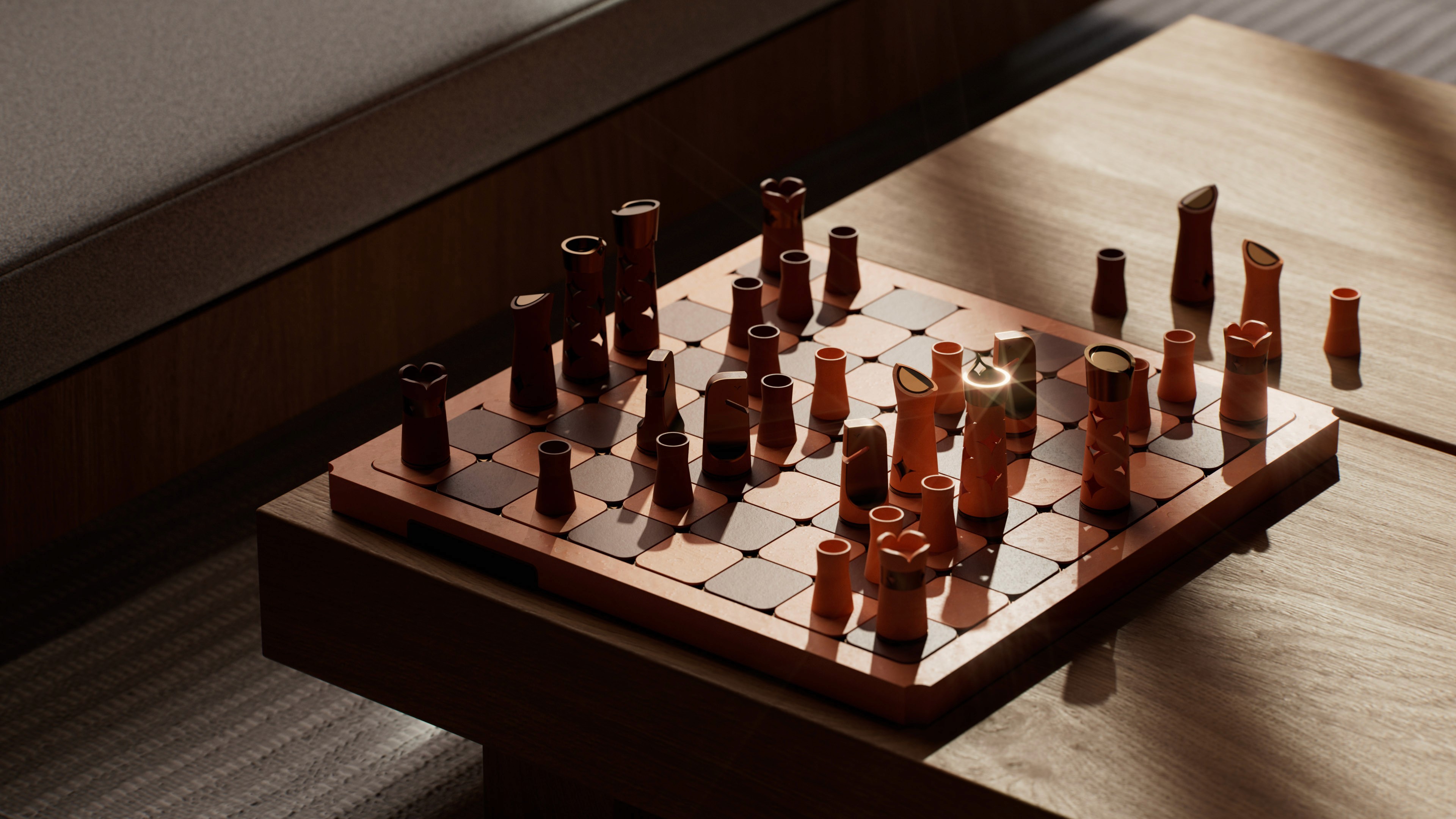
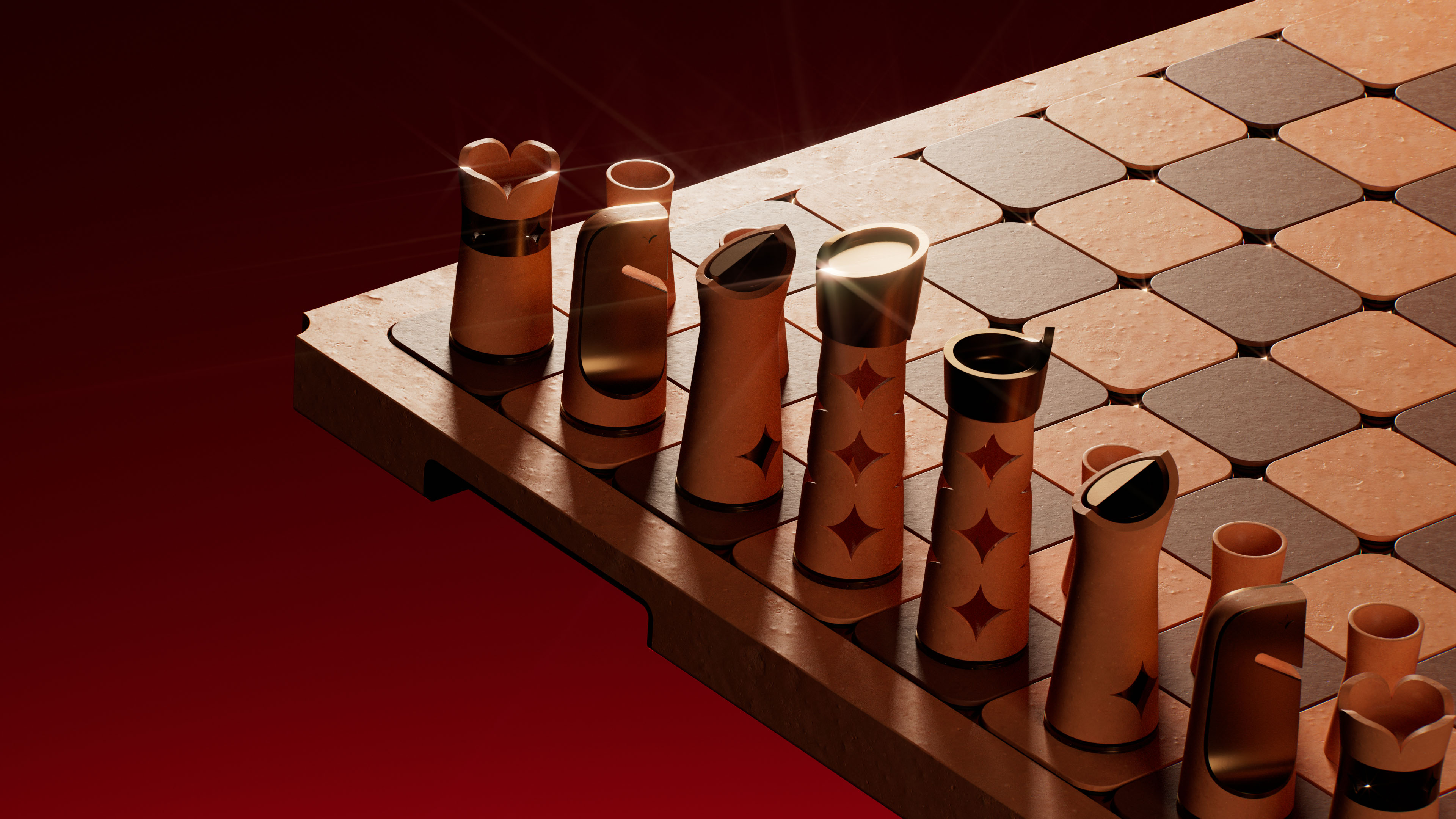
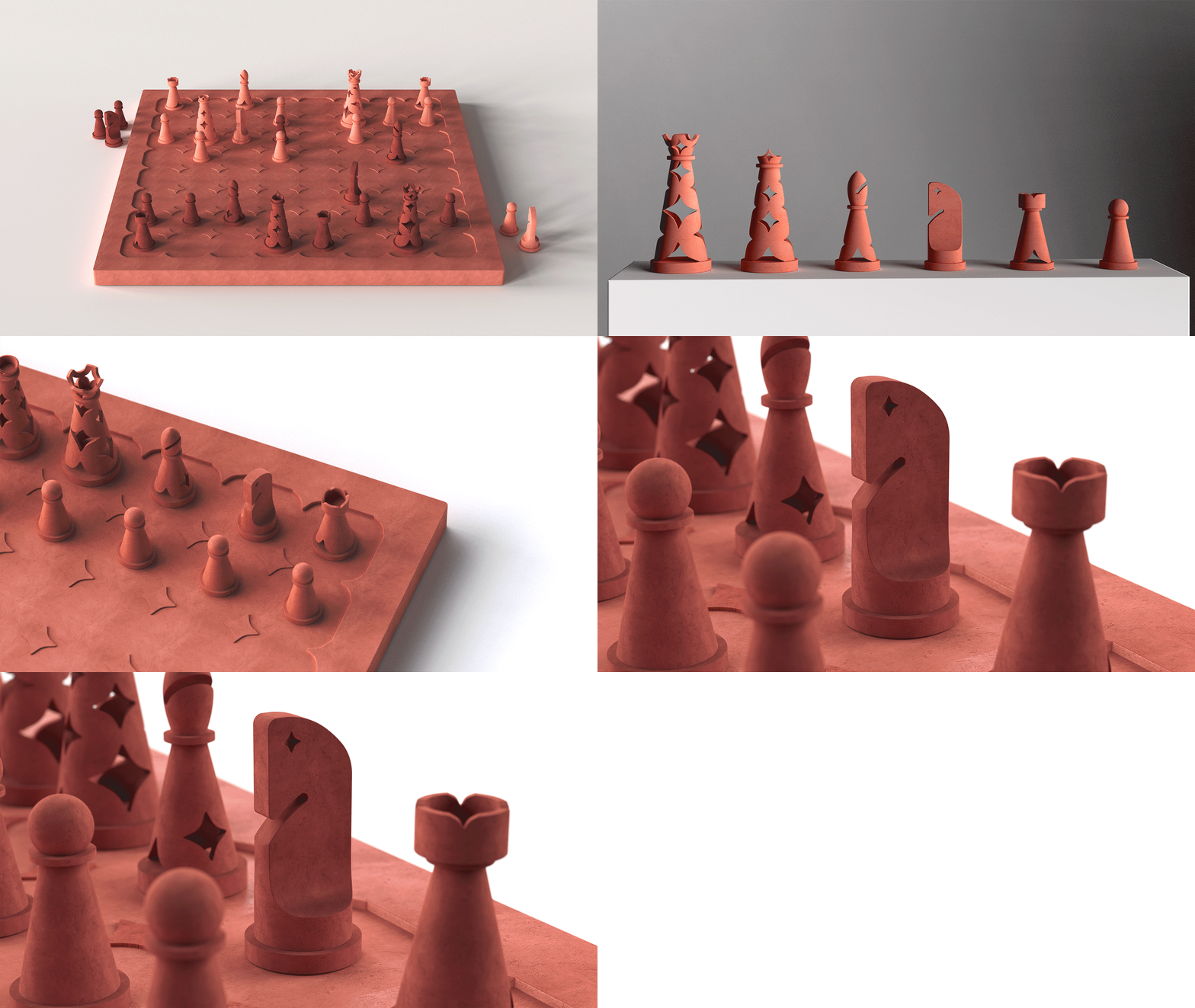
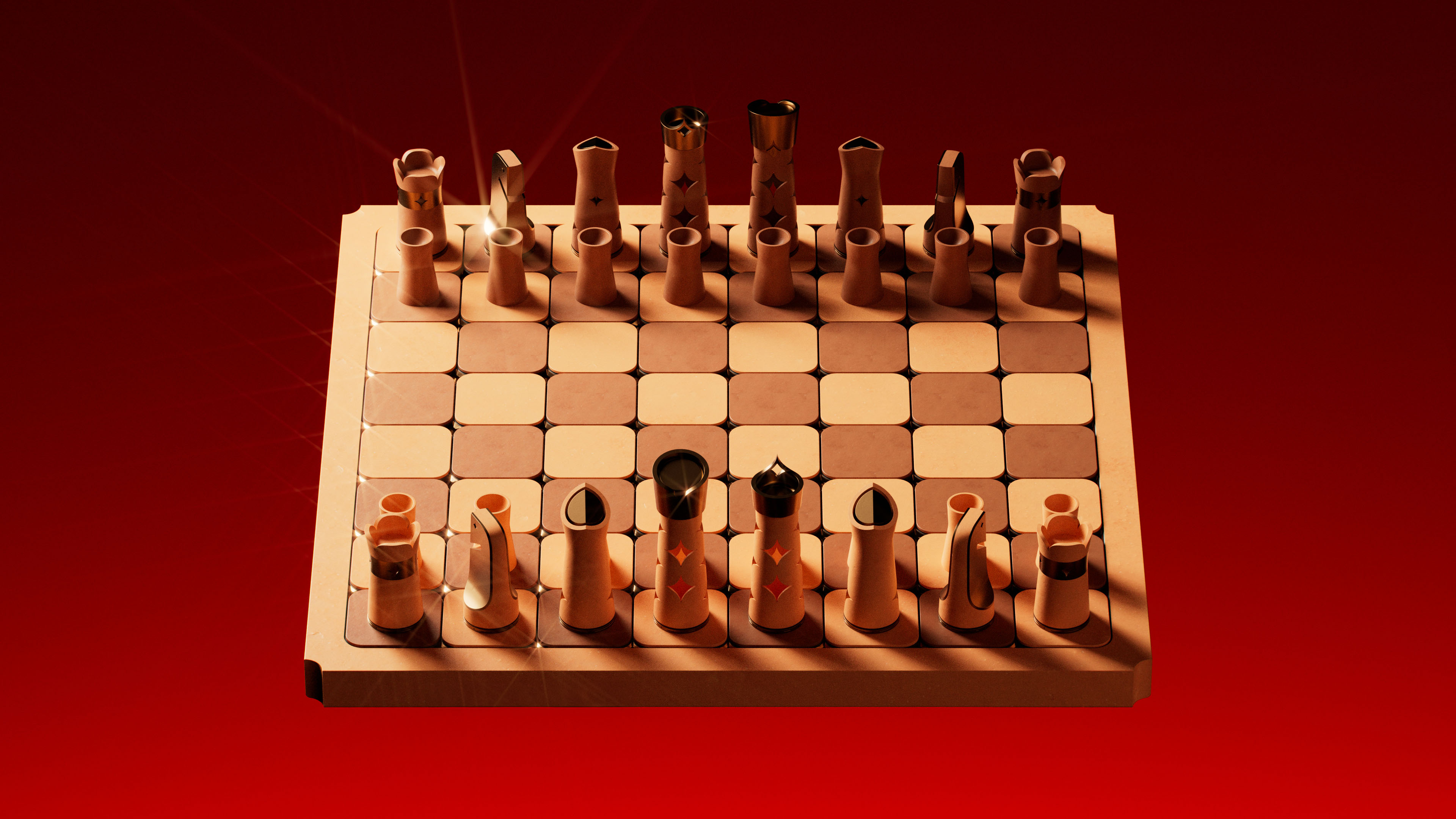
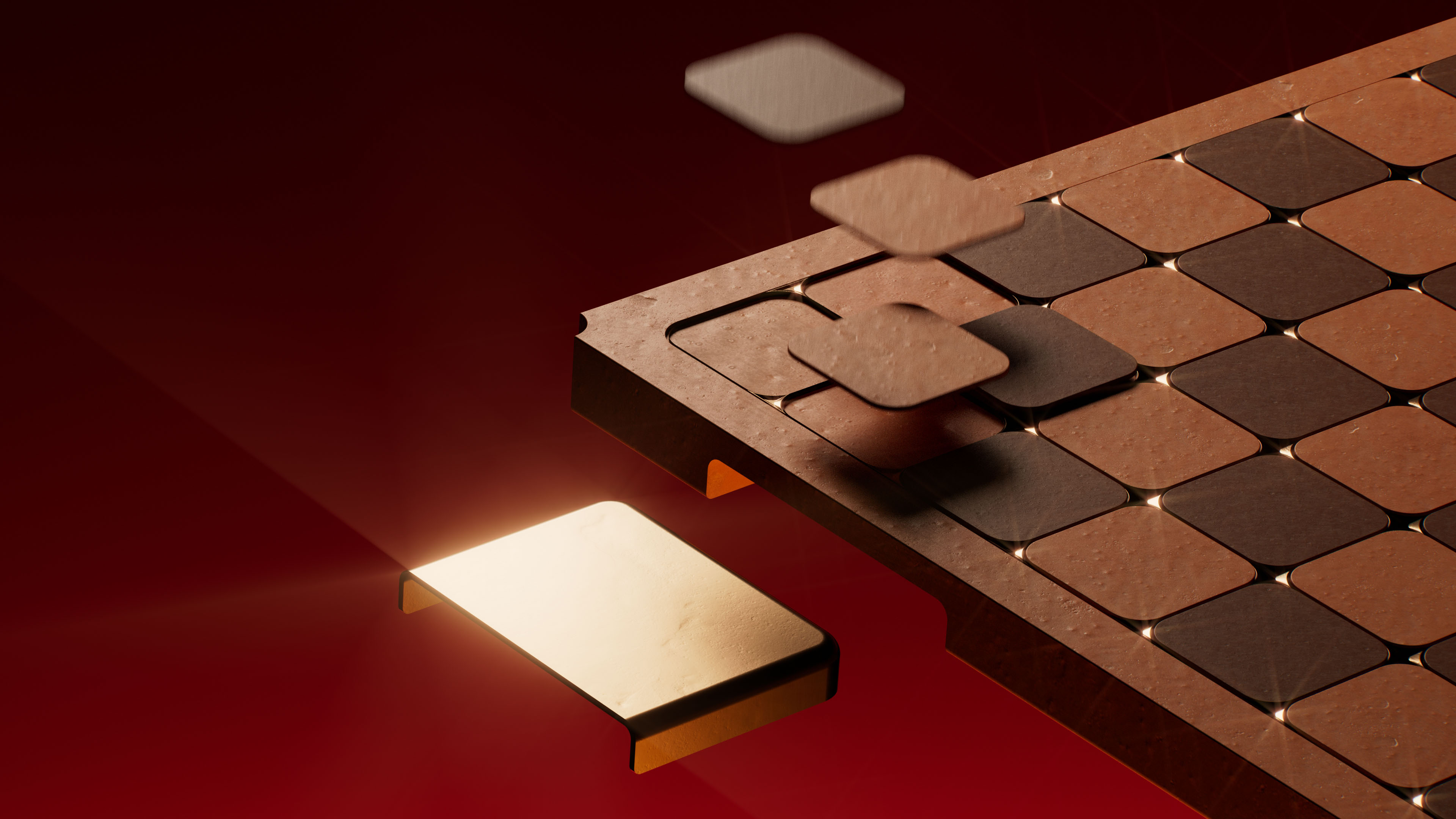
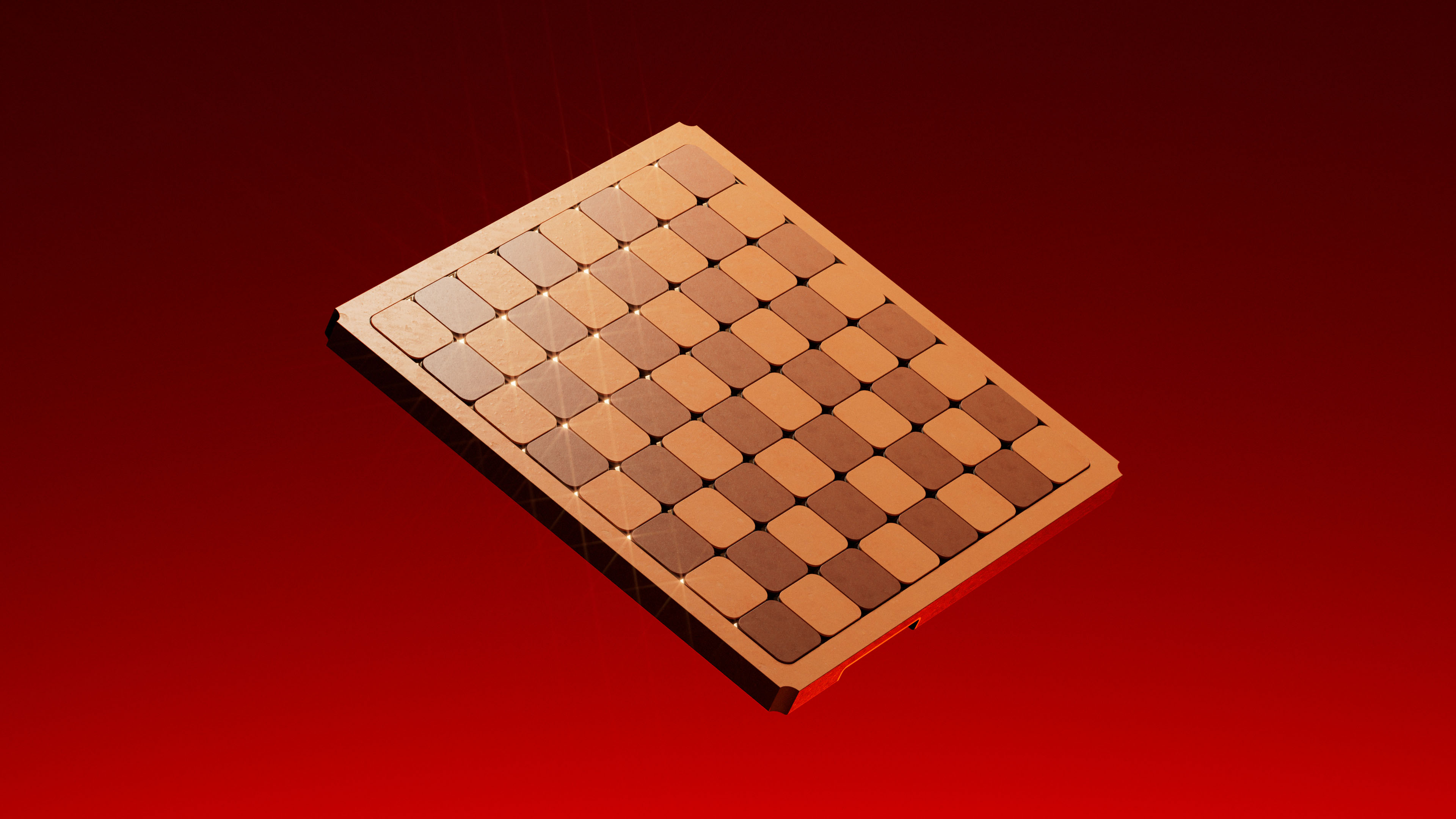
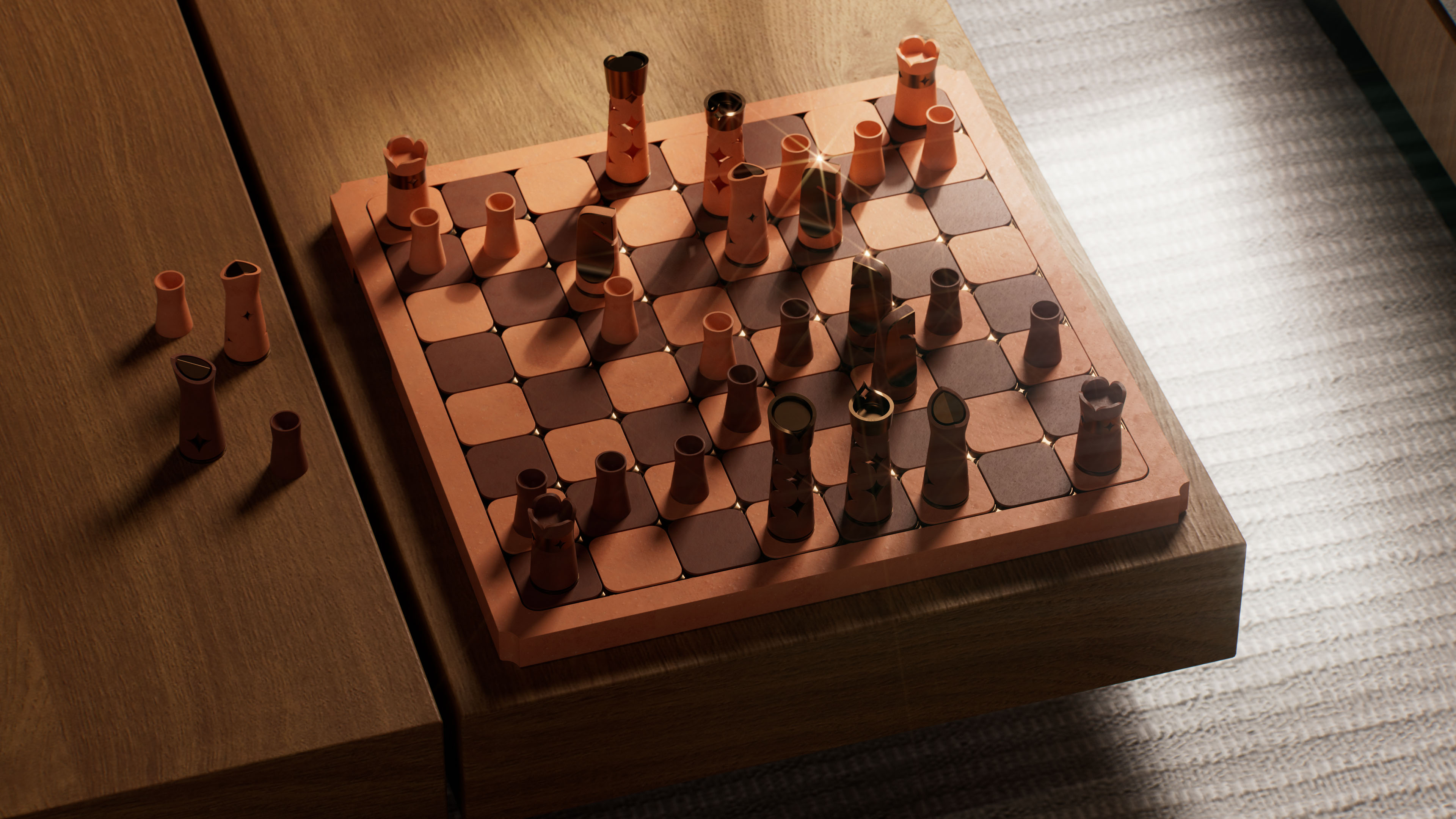
The board is restrained by intent, never competing with the pieces yet rich with meaning. Its raised playing surface echoes the rhythm of Indian stepwells, while sunken bronze stars introduce depth, tactility, and a visual order.
At the heart of the board lies a system of sunken bronze stars embedded within each square. These are not decorative inserts, but tactile markers that introduce depth, rhythm, and orientation. As light moves across the surface, the stars catch and release highlights, allowing the board to transform subtly throughout the day.
The numerical structure of the board carries symbolic intent. Forty-nine full stars reference seven cycles of seven, a number associated with completeness and balance, while twenty-eight half-stars echo the lunar cycle and the passage of time.
Pieces
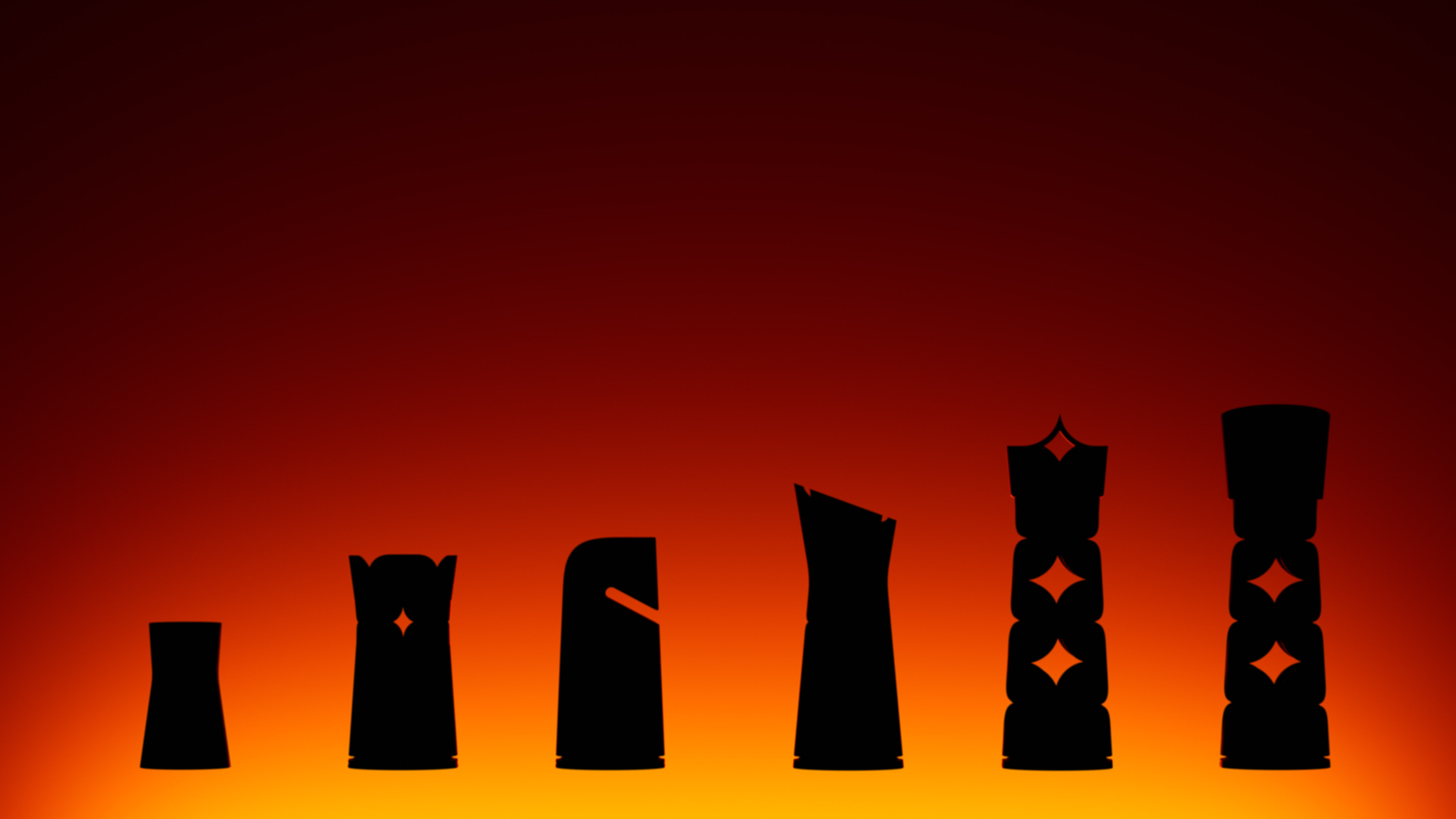
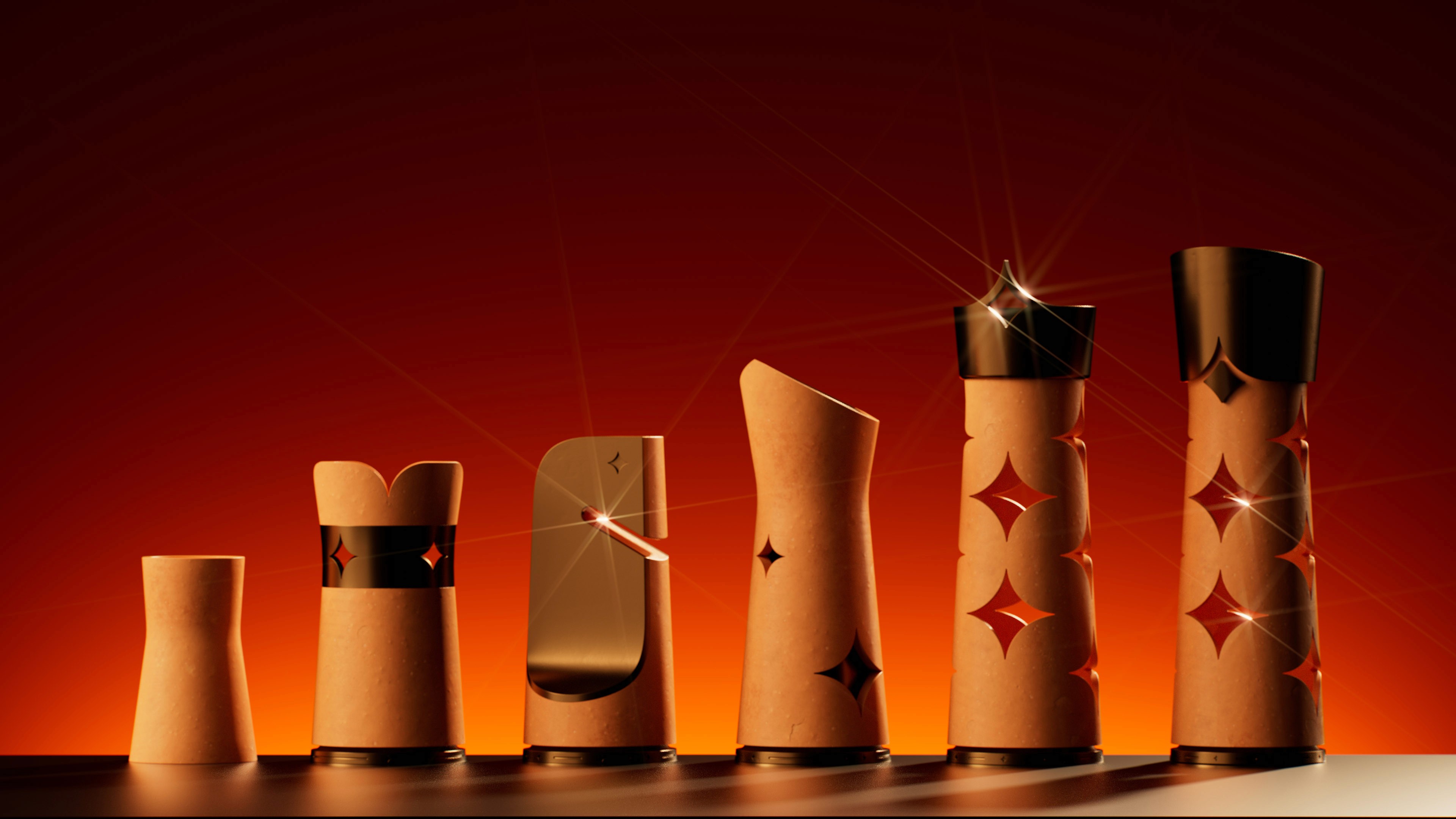
Each piece is a return to origin rather than a reinterpretation of convention. Inspired by chaturanga, Indian material culture, and symbolic roles of power, labor, and intuition, the set rejects the Staunton template entirely. Instead, these forms are abstract, grounded, and shaped by meaning rather than ornament.
Soldier (Pawn)
The Soldier represents potential. It begins small, restrained, and exposed. Its hollowed crown is deliberate—a space waiting to be earned.
Chariot (Rook)
The Chariot is grounded force. It waits at the edge, unmoving until called upon, then cuts across the board with certainty.
Knight (Horse)
The Knight embodies intuition and agility. Its form suggests motion even at rest.
Elephant (Bishop)
The Elephant represents foresight and alignment. Rooted in the original form from chaturanga, it observes before acting, moving diagonally with purpose.
Queen
The Queen is defined by an intentional absence, her form holds space rather than mass, symbolizing influence through resonance rather than dominance.
King
The King is inspired by Indian headpieces rather than Western crowns, his authority is worn, not imposed. He does not command through height or excess, but through weight and lineage.
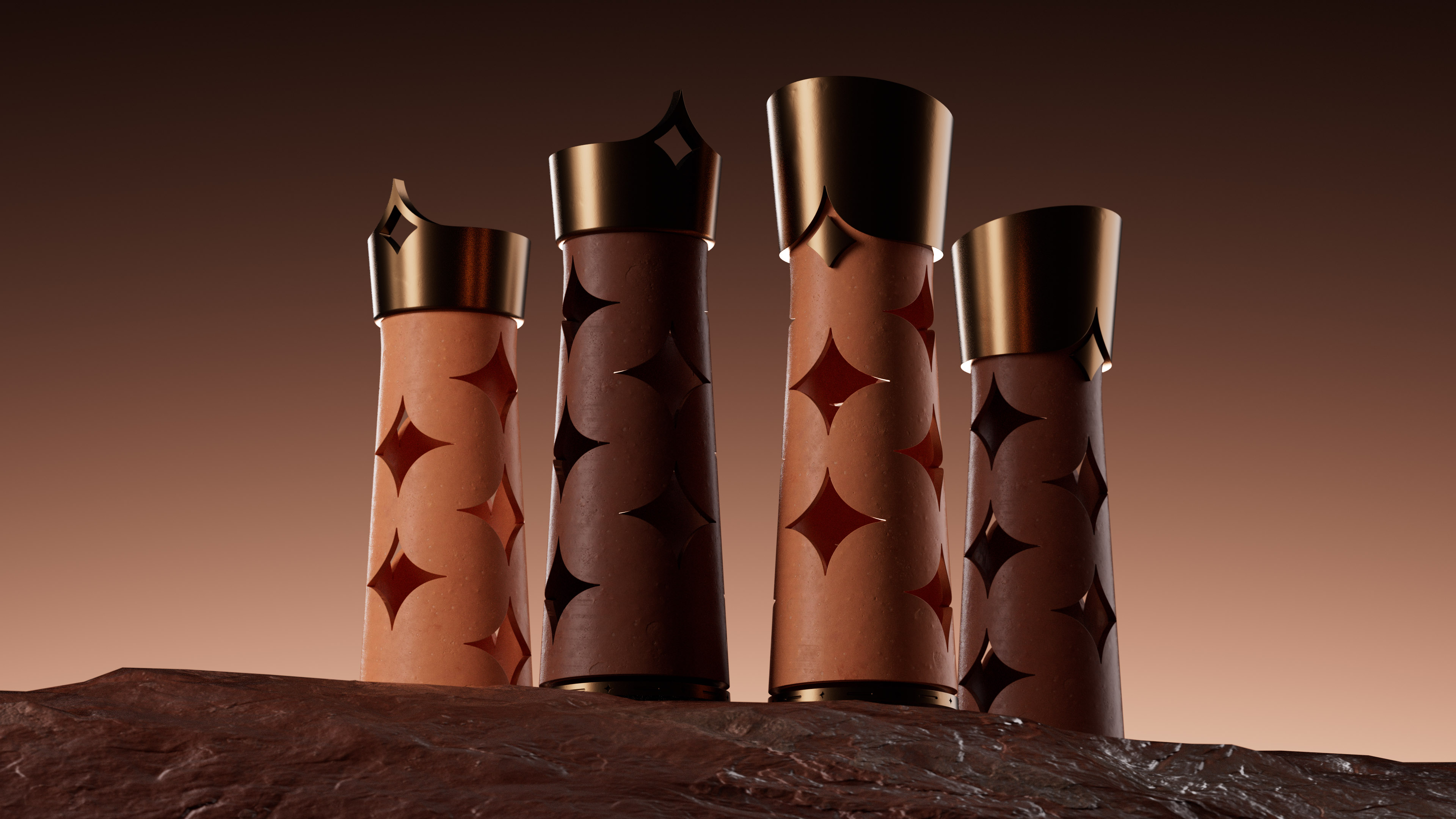
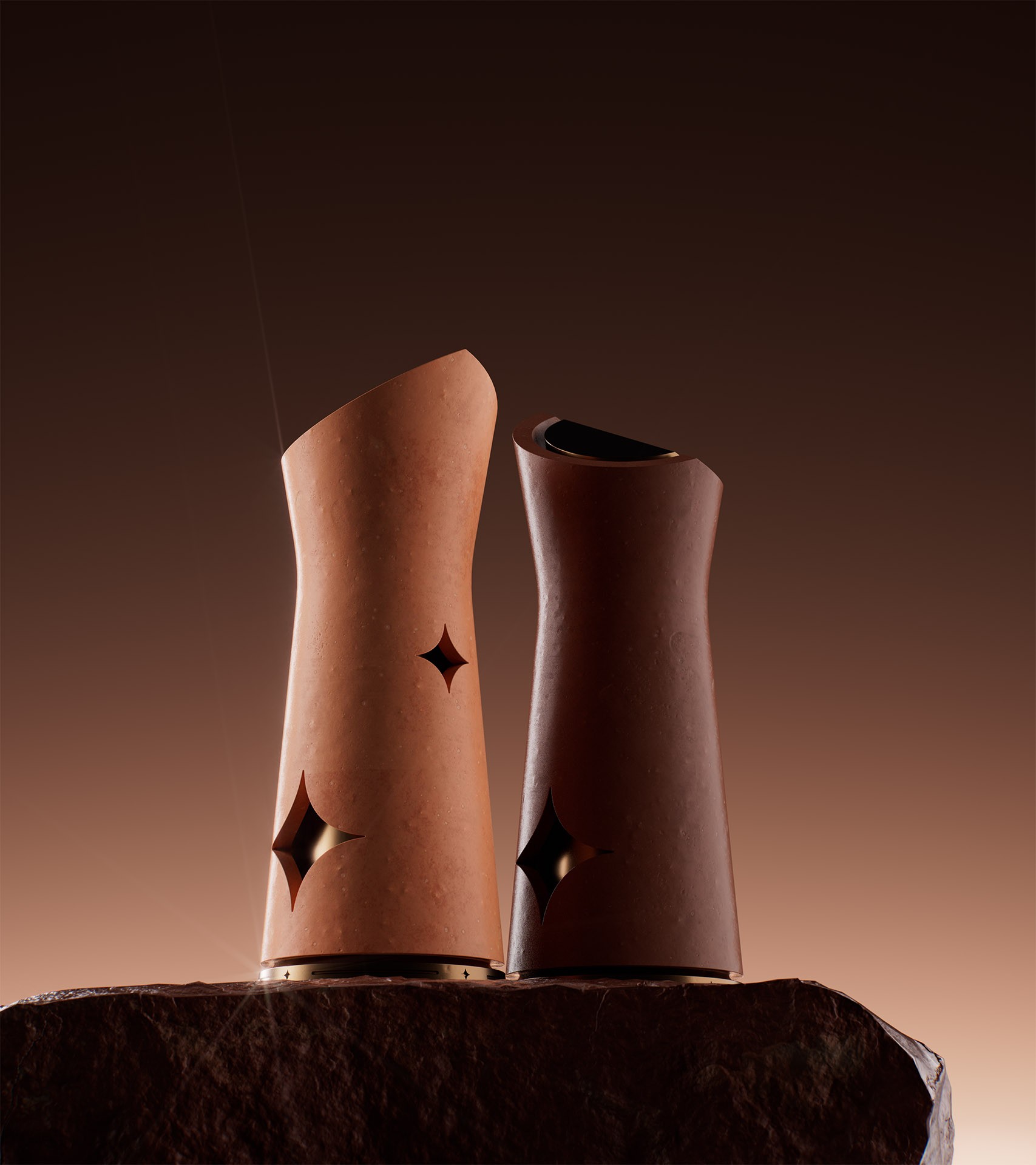
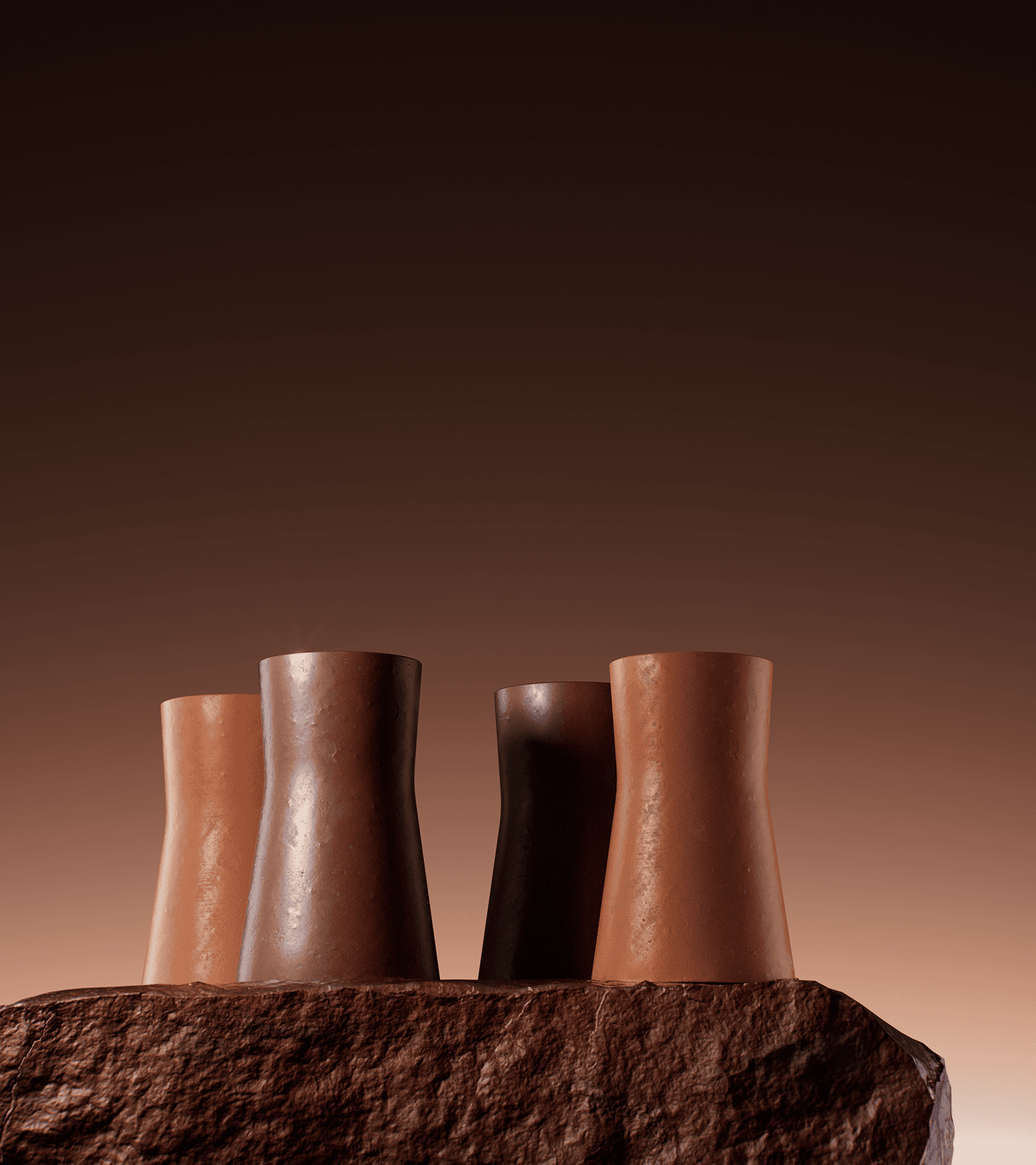

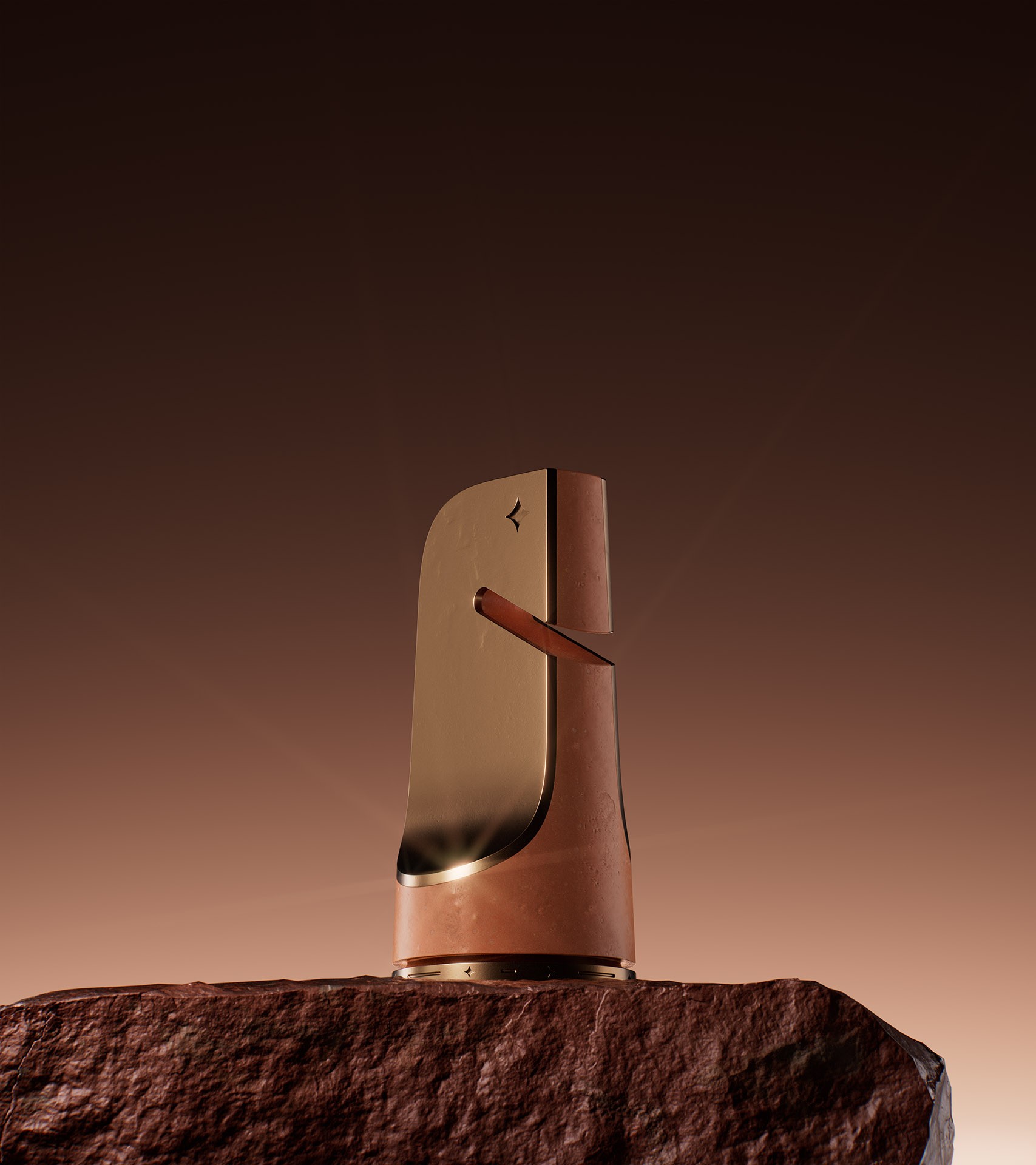


The pawn embodies potential. Its hollowed form anticipates change, allowing a single jewel-like sphere to crown it upon promotion. This gesture turns the pawn to queen transformation into a ritual - one object evolving rather than being replaced - honoring progress, choice, and earned power within the system.
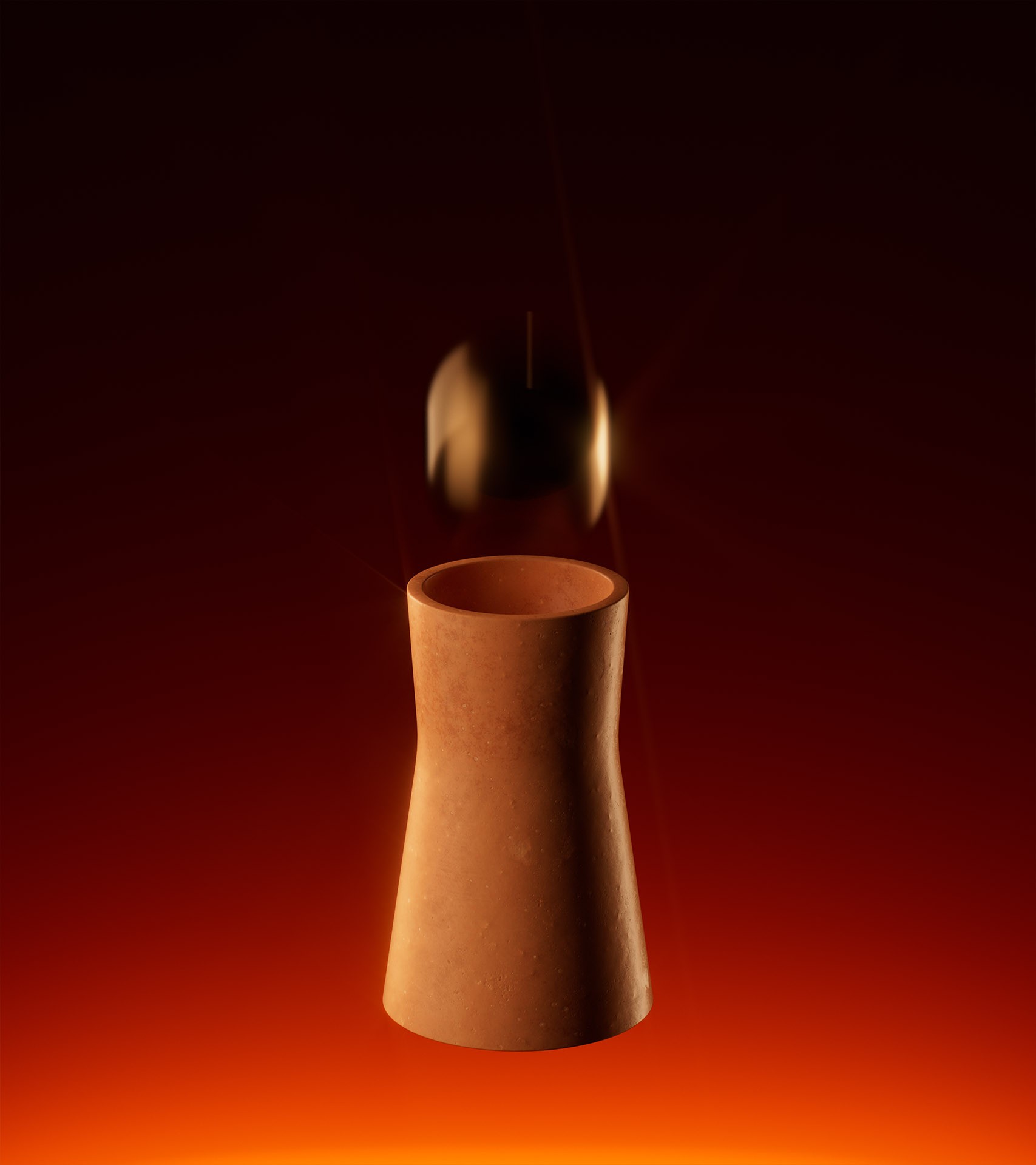
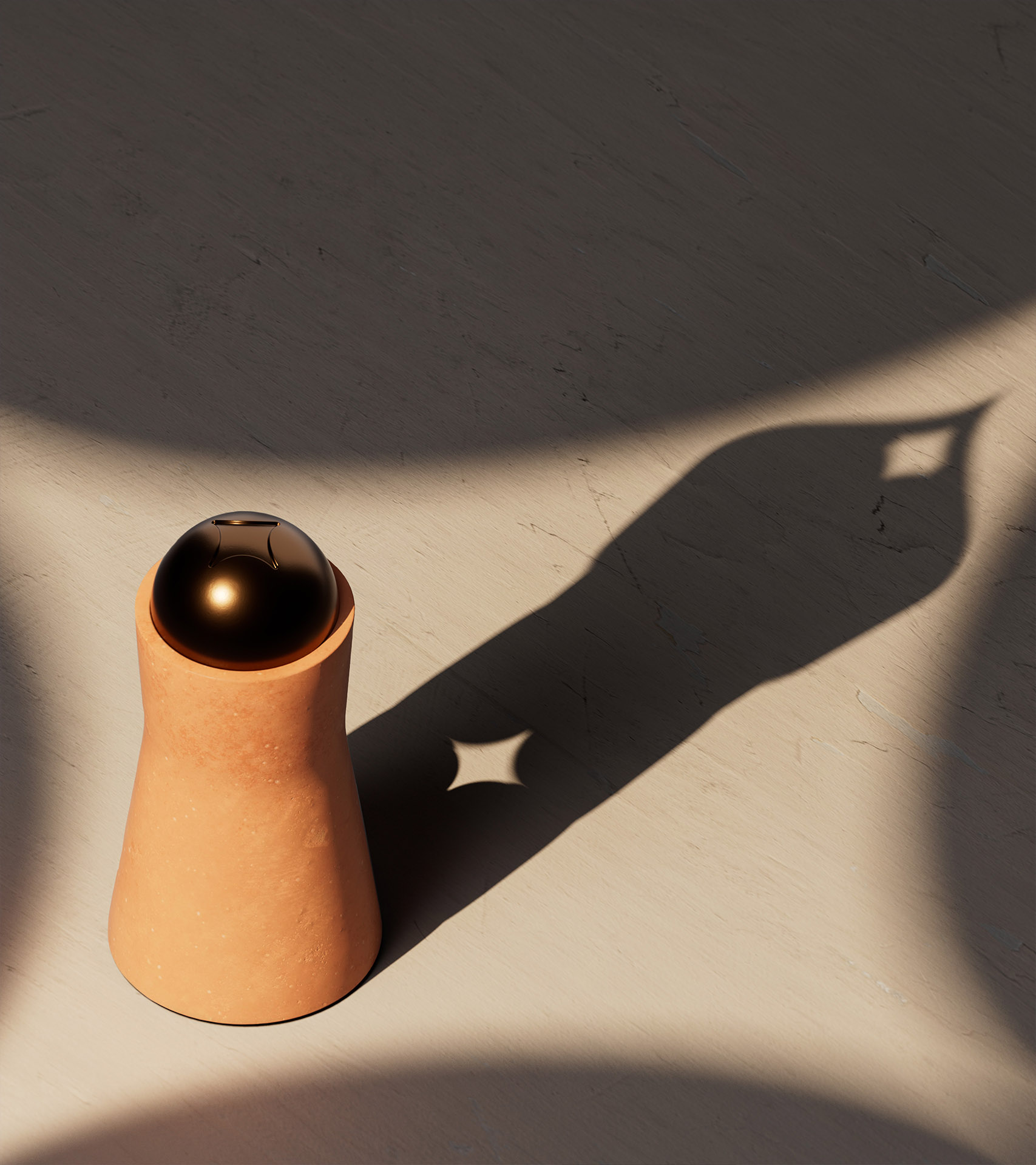
Unboxing Aakaar is designed as ceremony. Drawing from the familiarity of festive gift-giving, layers unfold through color and light. Familiar jali-inspired cutouts, symbolic stars, and angled reveals guide the experience. The pieces present themselves ready for play, reinforcing ritual before the first move is made.
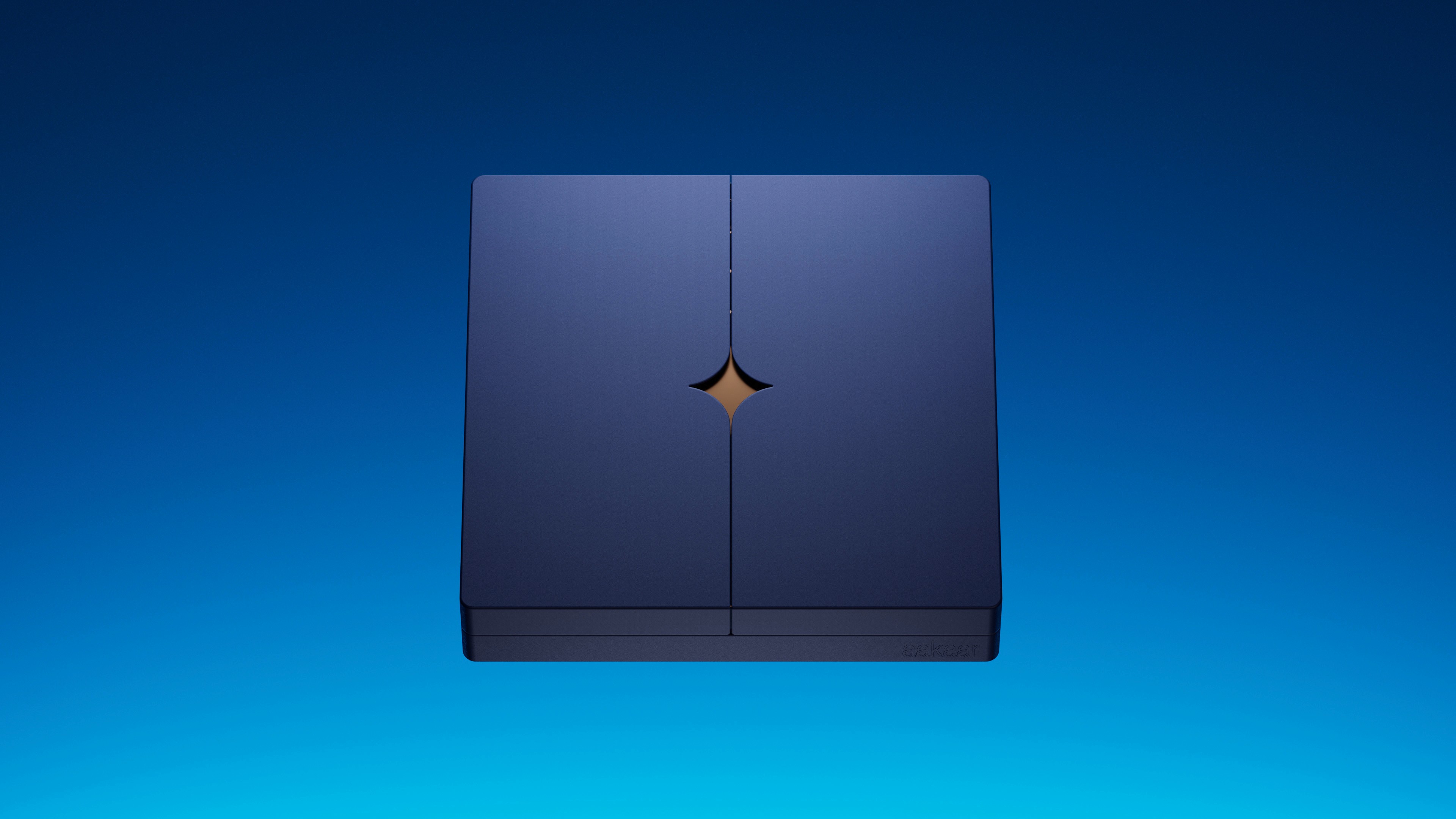

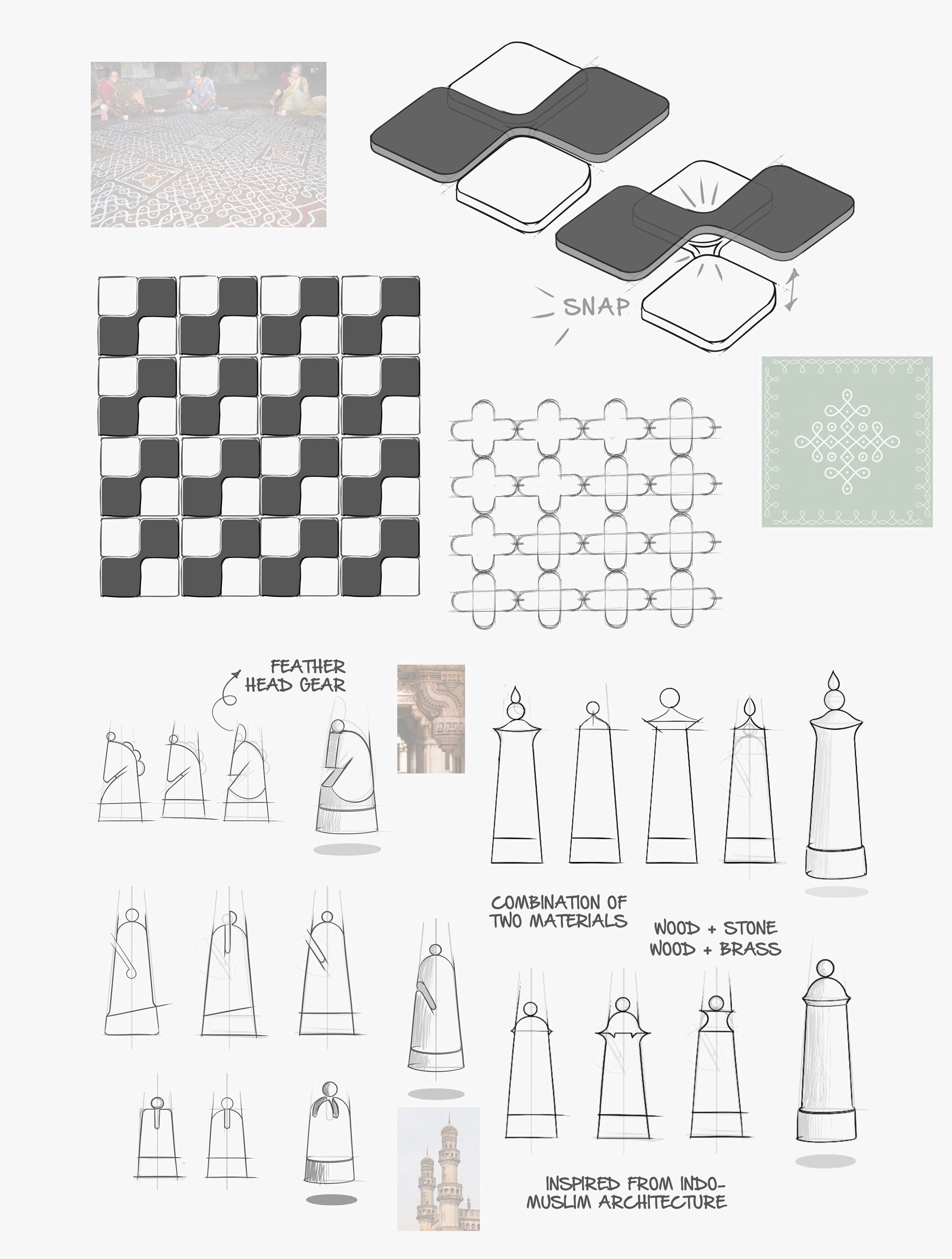
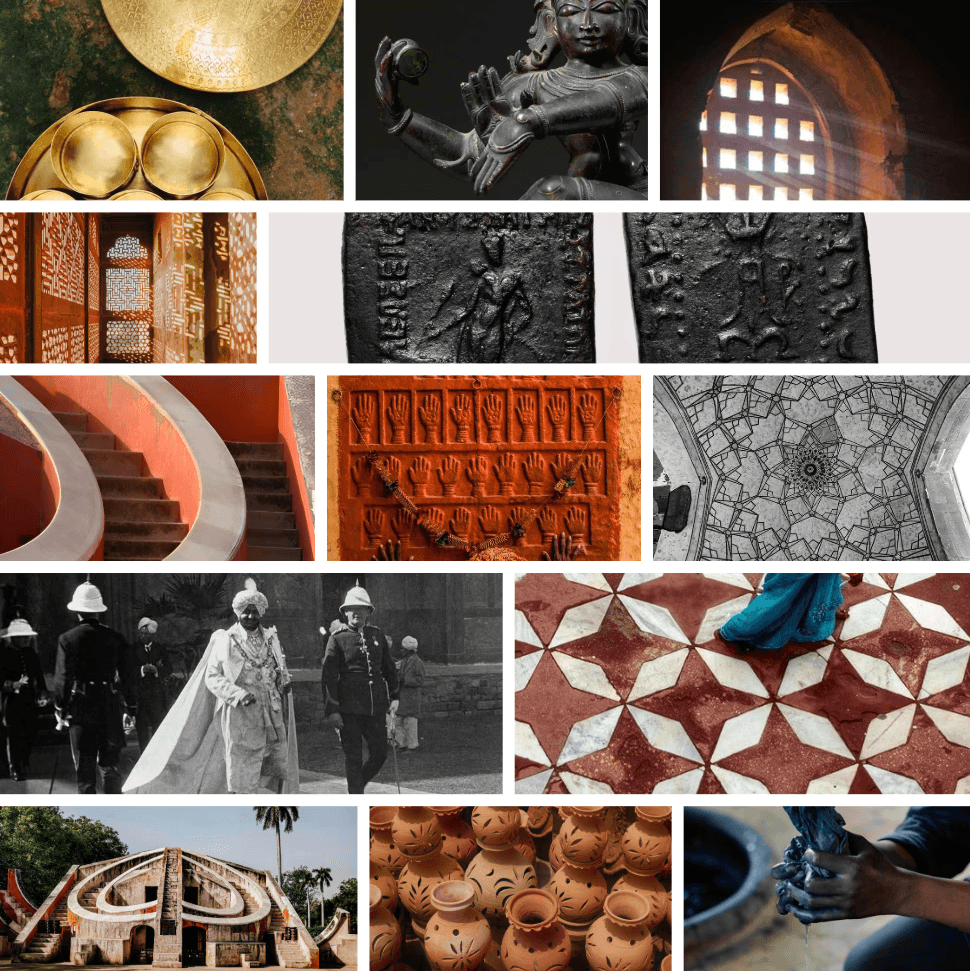
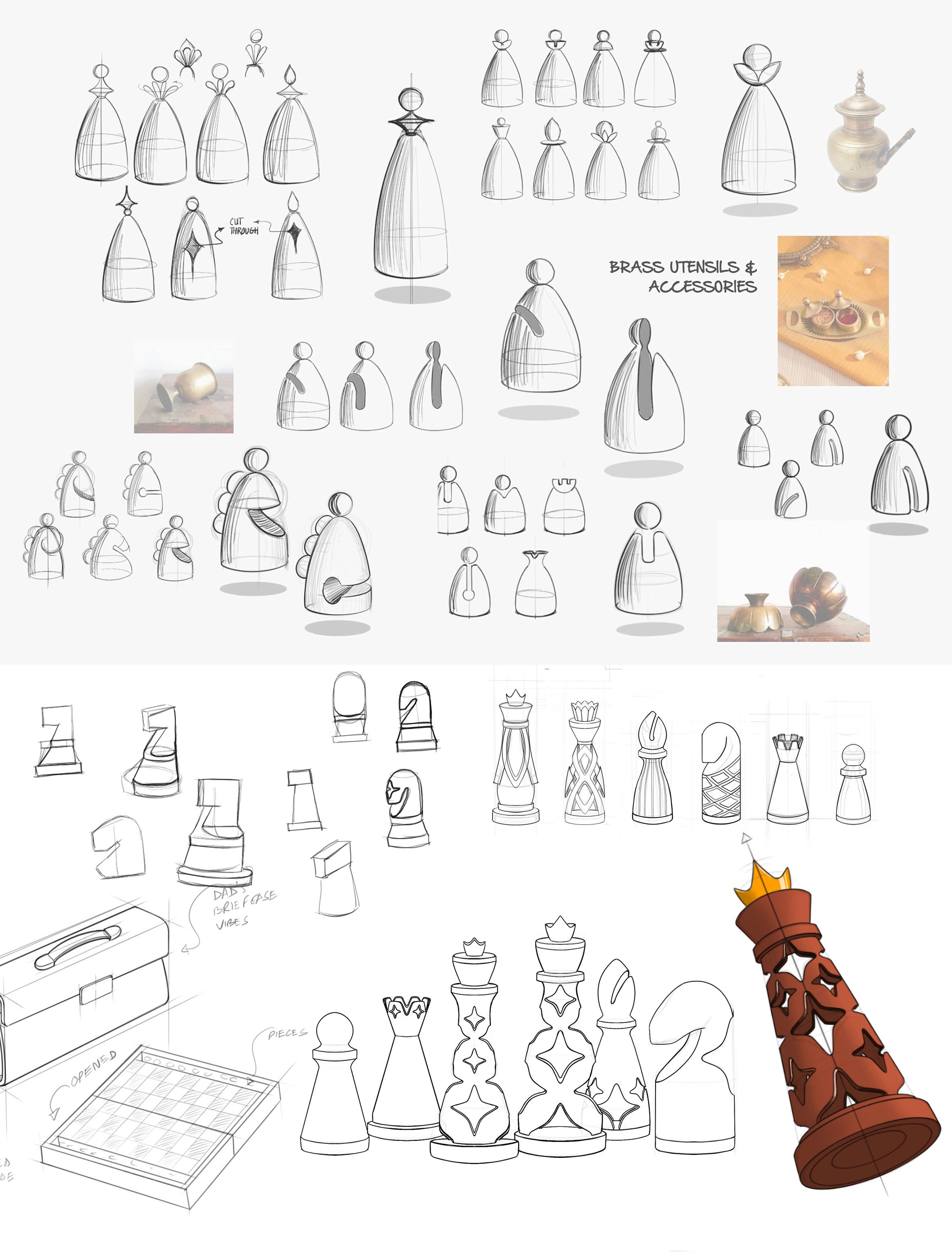
The project began by questioning how Indian identity could be expressed without relying on ornament or nostalgia. Early exploration focused on conversation, research, and broad cultural references rather than form, allowing the direction to emerge organically.
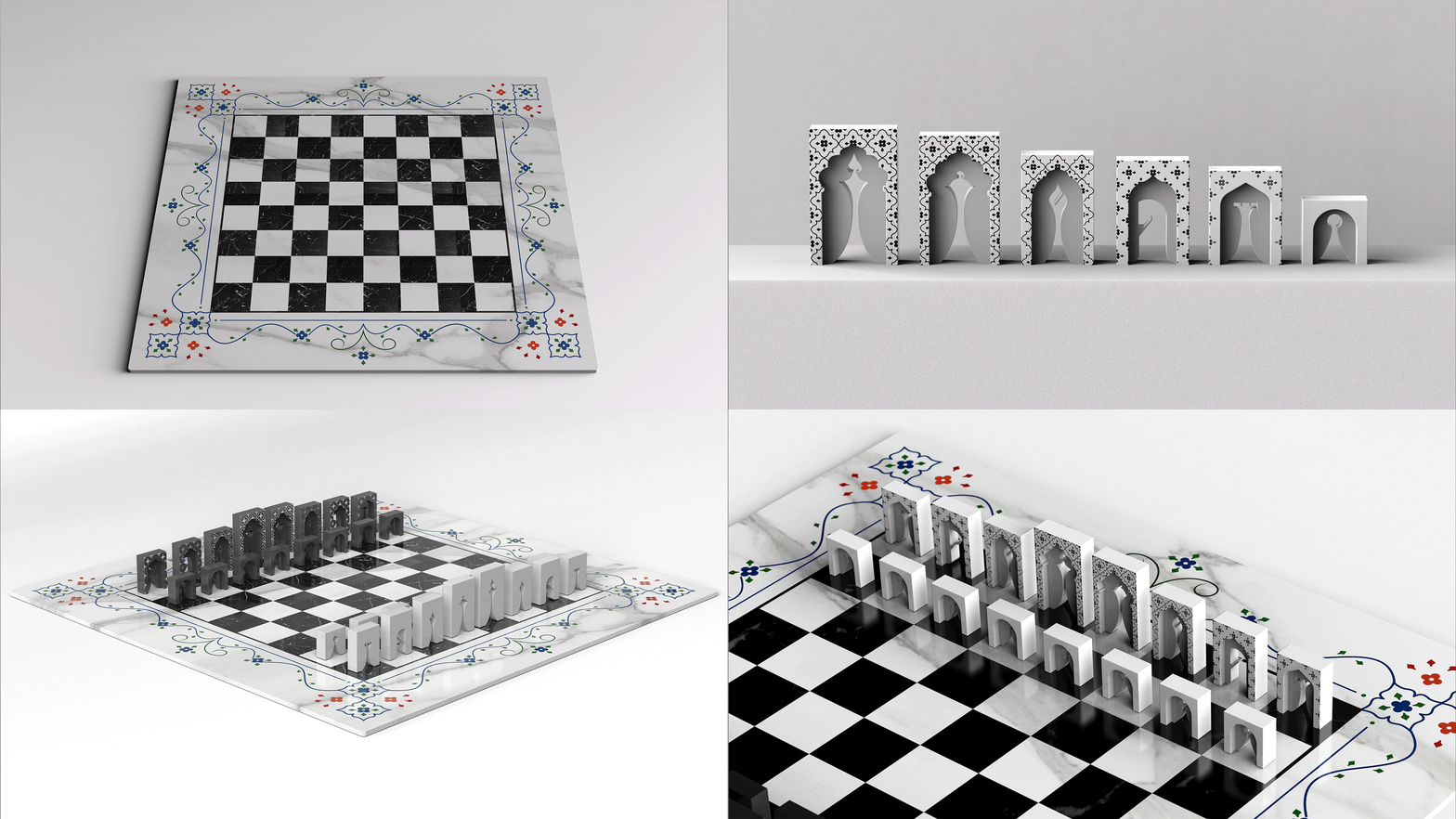
Over thirty sources of inspiration were distilled into three guiding pillars: materials, patterns, and ornamentation. Two material-led directions were developed in parallel, with terracotta and marble explored independently. Terracotta offered greater flexibility and cultural reach, while the need for weight and presence led to the introduction of bronze as a complementary accent.
From there, the work became increasingly precise - regional terracotta tones were carefully selected, hierarchy was explored through form and density, and components were designed as a system rather than isolated objects. Digital tools and 3D modeling supported this rigor while preserving a raw, human finish.